Anthropic Releases Claude Fable 5.1 And Mythos 5.1 Breaking Benchmarks Once Again
0:00 / 3:43
Chapters
Sources
DAILY ROUNDUP
Anthropic Releases Claude Fable 5.1 And Mythos 5.1 Breaking Benchmarks Once Again
calendar_today Date:
schedule Duration: 3:43
visibility 178 Views
Anthropic launches Claude Fable 5.1 and Mythos 5.1, Runway unveils its first Interface World Model, OpenClaw ships its biggest update ever, Google Pics brings AI image editing to Workspace, and Dyson launches a camera-equipped toothbrush.
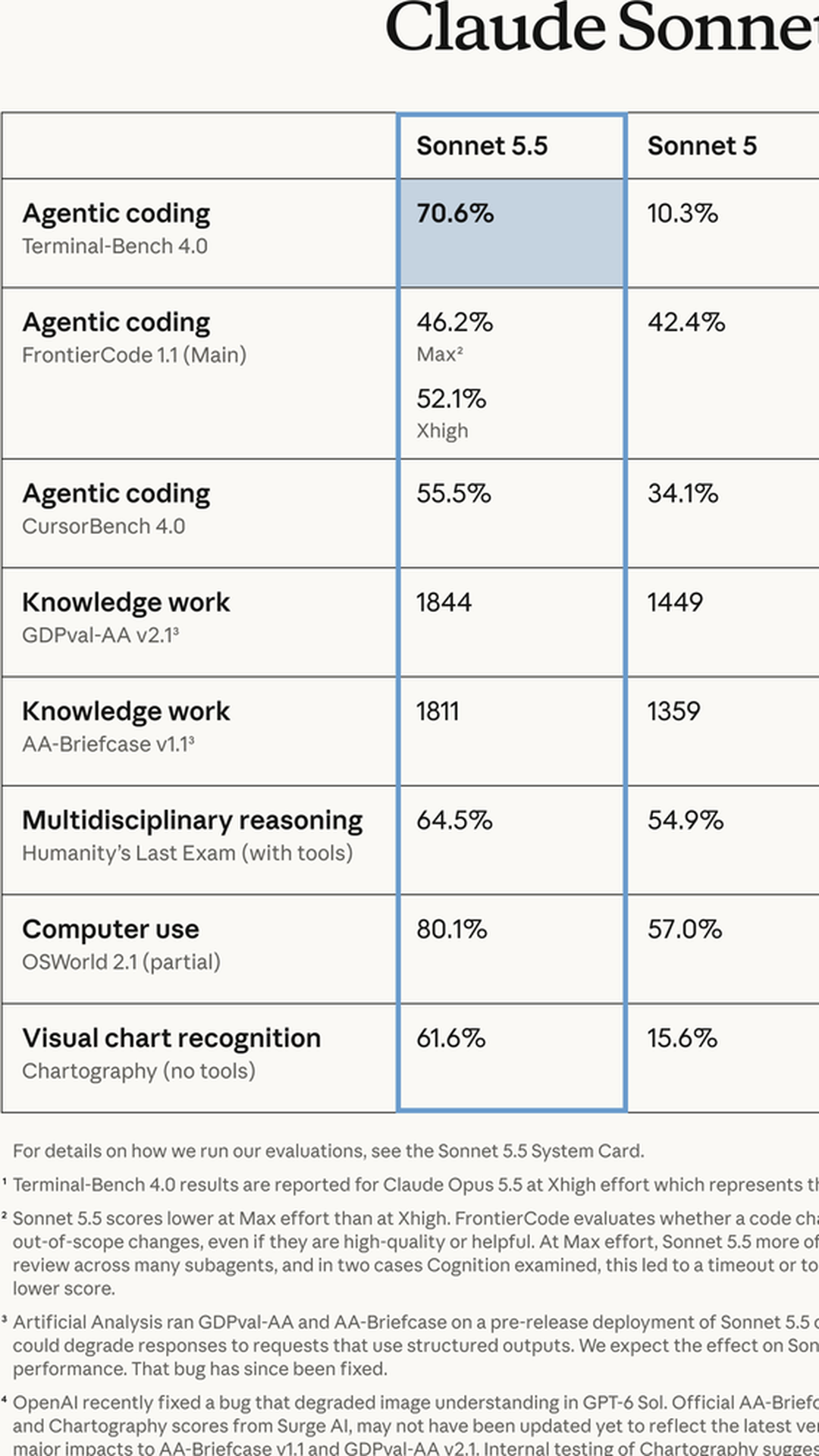
- 01. Fable 5.1 is broadly available with a 1M token context window; Mythos 5.1 is restricted to vetted users in Anthropic's Project Glasswing program with safety classifiers removed
- 02. Runway's Solaris generates interactive interfaces frame by frame in real time with no code, and evaluators preferred it over Claude Opus 5-coded UIs in the majority of comparisons
- 03. OpenClaw 2.0 touches installation, messaging, memory, skills, models, automations, native apps, plugins and security, with over 16,000 pull requests from 933 contributors
- 04. Google Pics lets users edit individual objects, translate text in place, and collaborate on shared canvases, rolling out to Workspace and Google AI Pro/Ultra subscribers
- 05. Dyson's $499 CameraJet uses a 100,000-pixel macro camera to detect gaps between teeth and fire a precision mouthwash jet within a tenth of a second
Today's AI news: Anthropic released Claude Fable 5.1 and Mythos 5.1, their most capable coding models yet. Runway introduced Solaris, its first Interface World Model that generates software live with no code. OpenClaw shipped its biggest update ever, calling it 2.0 Accidentally. Google Pics brings AI image creation and editing to Workspace. And Dyson launched CameraJet, a toothbrush with a built-in camera.
Chapters:
0:00 Today's AI News
0:26 Claude Fable Mythos 5.1
1:11 Runway Solaris
1:51 OpenClaw 2.0
2:32 Google Pics
3:11 Dyson CameraJet
Blend Roundup 2026-09-01
https://x.com/claudeai/status/2094848572143407483
https://x.com/felixrieseberg/status/2094849655167471773
https://x.com/runwayml/status/2094463070466646019
https://x.com/openclaw/status/2094266903204434431
https://x.com/GoogleWorkspace/status/2094818432973725961
https://x.com/IterIntellectus/status/2094761595217850387
https://x.com/ritwikpavan/status/2094834917515632779
Anthropic released Claude Fable 5.1 and Mythos 5.1, their most capable coding models yet, Runway built an AI that generates software live, OpenClaw shipped its biggest update ever, Google Pics brings AI image editing to Workspace, and Dyson built a toothbrush with a camera inside - an odd mix today, let's dig in.
Anthropic has released two new models: Claude Fable 5.1 and Claude Mythos 5.1, aimed squarely at coding and knowledge work. Fable 5.1 is available broadly through the API, with a million token context window and lower caching costs, and reportedly solves agentic coding tasks at roughly half the cost of the previous Fable 5. Mythos 5.1 is a different story - it's restricted to a small group of vetted users inside Anthropic's Project Glasswing program, where the usual safety classifiers and fallback restrictions have actually been removed for approved participants. That's a striking admission about what those safeguards are normally there to prevent, and whether Mythos ever reaches the rest of us remains to be seen. Claude just keeps on cooking.
Runway has introduced Solaris, what they're calling the first Interface World Model. Rather than running code, it generates the entire interface frame by frame in real time, reacting to your clicks and drags as a separate language model decides how the software should evolve and feeds Solaris the prompts to render each new state. It's built on Runway's Gen 4.5 video model, essentially treating software the same way it treats video. In Runway's own testing, evaluators actually preferred Solaris-generated interfaces over ones coded by Claude Opus 5, in the majority of comparisons. Whether that holds up outside a demo is the real question.
OpenClaw has shipped its biggest update since launching last November. And the team's own blog post calls it "OpenClaw 2.0, Accidentally." It started as a plan to simplify installation and rebuild the browser app - but doing that properly meant reworking the entire codebase along the way - touching messaging, memory, skills, models, automations, native apps, plugins and security in the process. The numbers are substantial too: over sixteen thousand pull requests, roughly half of everything ever merged into the project, from nine hundred and thirty three contributors - more than half of them first-timers. Sometimes the best releases happen by accident.
Google has launched Pics, a new AI image creation and editing tool built into Workspace, powered by their Nano Banana 2 model. Unlike most AI image tools, Pics lets you edit individual objects within a generated image, translate or refine text in place, and collaborate with teammates on a shared canvas in real time. It's rolling out now to Workspace customers and Google AI Pro and Ultra subscribers, and you can jump straight into the editor from inside Docs or Slides by clicking any image. Google is effectively pitching this as their answer to Canva, except you're prompting instead of designing.
Dyson has launched CameraJet, a toothbrush with an actual camera built into the head. A hundred-thousand-pixel macro lens scans your mouth twenty eight times a second, spots the gaps between your teeth where plaque actually forms, and fires a precision jet of mouthwash at them within about a tenth of a second. It's the result of six years of development, trained on nearly half a million dental images, and Dyson says none of that footage is stored anywhere, on the device or in the cloud. All of that engineering, for four hundred and ninety nine dollars, to floss slightly better. We've officially reached peak toothbrush.
Meta Data
LLM: